
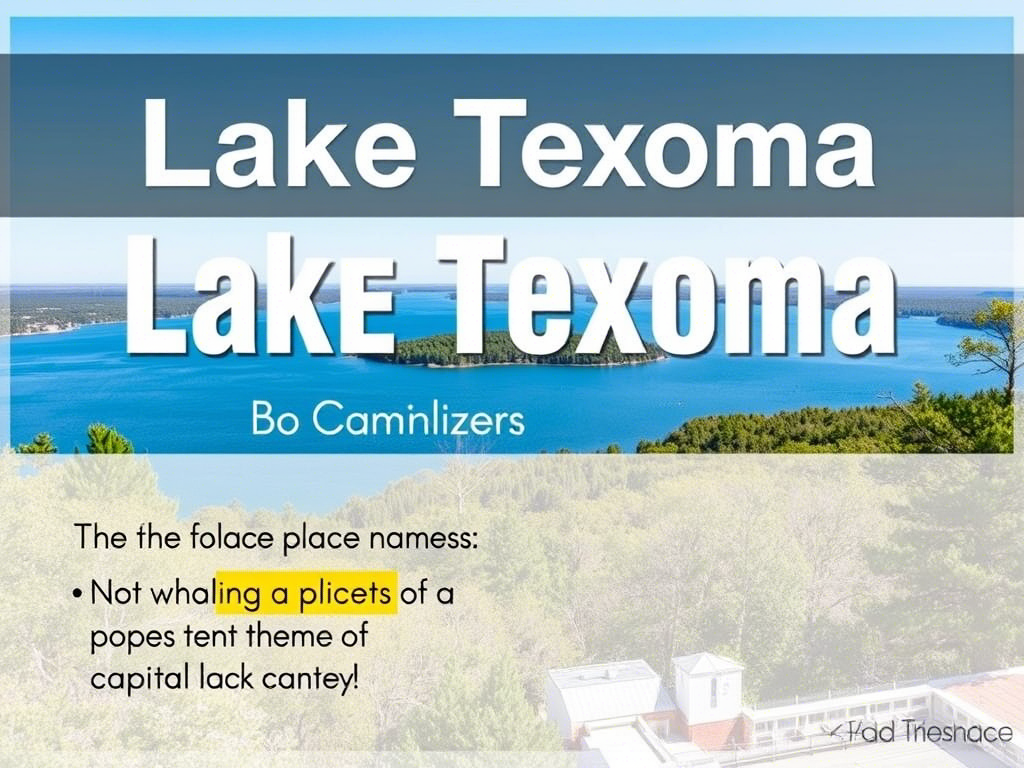
Language can sometimes be tricky, especially when it comes to names. People often wonder what words need capital letters and which ones do not. One common question is whether “Lake Texoma” should be capitalized. The short answer is yes — it should be. But let’s explore why that is and why it matters.
In this article, we’ll look at what makes a word a proper noun, how place names are written in English, and why saying “Lake Texoma should be capitalized” is not just a rule—it shows respect for the place and helps keep writing clear and correct. We’ll also explore some fun facts about Lake Texoma to understand why this name holds importance for so many people.
What Are Proper Nouns?
To understand why Lake Texoma should be capitalized, we first need to understand what a proper noun is. A proper noun is the specific name of a person, place, or thing. These names are always written with capital letters.
Here are some examples:
-
Person: Martin Luther King Jr.
-
Place: New York City
-
Thing: Empire State Building
When you say “lake” by itself, it’s a common noun. But when you say “Lake Texoma,” you are naming a specific lake. That turns it into a proper noun.
Just like you wouldn’t write “george washington” in lowercase, you also shouldn’t write “lake texoma” without capital letters. It’s not just a random lake; it’s Lake Texoma—a well-known destination that straddles the border of Texas and Oklahoma.
Why Lake Texoma Should Be Capitalized
When we say Lake Texoma should be capitalized, we are saying it’s a name that deserves proper treatment. Here’s why:
It’s a Geographic Name
Lake Texoma is the official name of a real place. Names of geographic features like lakes, rivers, mountains, and cities always get capitalized in English. Other examples include the Mississippi River, Mount Everest, and Grand Canyon. Lake Texoma fits into that same group.
It Appears on Maps and Signs
When something is listed on maps, government documents, or road signs, that’s a clear signal that it’s a formal name. Look up any map of Texas or Oklahoma, and you’ll see “Lake Texoma” with both words capitalized.
It Honors the Place’s Importance
Capitalizing a place name is a sign of respect. Lake Texoma is not only large—it covers over 89,000 acres—but it’s also very popular for boating, fishing, and family vacations. Using lowercase letters makes it seem like it’s just any lake, when in fact, it is one of the biggest reservoirs in the United States.
It Helps Avoid Confusion
Correct capitalization helps make writing easier to read. If someone sees “lake texoma,” they might stop and wonder, “Is this a general lake near Texoma?” That’s confusing. But when you write “Lake Texoma,” it’s instantly clear you’re talking about a specific and important place.
How We Use Names in Sentences
Let’s look at how we use Lake Texoma in writing:
-
Correct: We spent our summer vacation at Lake Texoma and had a great time fishing and swimming.
-
Incorrect: We spent our summer vacation at lake texoma and had a great time fishing and swimming.
The second sentence looks strange, right? That’s because our brains are used to seeing proper names with capital letters. It’s easier to read and understand when we follow the rules.
A Little About Lake Texoma
Now that we understand the grammar part, let’s take a quick trip to the lake itself—at least in words!
Lake Texoma is located on the border of Texas and Oklahoma, which is where its name comes from: “Tex” for Texas and “Oma” for Oklahoma. It was created in the 1940s when the Denison Dam was built along the Red River. Today, it’s a very popular spot for outdoor activities.
People visit for:
-
Fishing: Especially striped bass.
-
Boating and sailing: There are several marinas.
-
Camping: Many campgrounds are located near the water.
-
Wildlife viewing: It’s a great place to see birds and other animals.
All of these reasons make Lake Texoma a well-loved place, and that’s one more reason why Lake Texoma should be capitalized—it’s not just a name; it’s a name with history and meaning.
When People Get It Wrong
Sometimes people write articles, blogs, or signs and forget to use capital letters. It might be a small mistake, but it changes how the message feels. It can make the writing look careless or less professional.
For example:
-
Bad: “visit lake texoma this weekend for fun and fishing.”
-
Better: “Visit Lake Texoma this weekend for fun and fishing.”
Capitalizing the name makes the sentence feel polished and correct. Especially in school reports, travel websites, or news stories, using correct capitalization shows that the writer understands the importance of language.
Final Word: Language Shows Respect
Using the right grammar isn’t just about rules—it’s about clear and respectful communication. When we write names like Lake Texoma properly, we show that we care about getting things right. We also make it easier for people to read and understand what we’re saying.
Saying that Lake Texoma should be capitalized is about more than just following grammar rules. It’s about treating names with the care they deserve.
Conclusion
In the end, it’s simple: Lake Texoma should be capitalized because it’s a proper noun. It’s a real place with a real name, and that name is part of what makes it special. Whether you’re writing a school paper, a blog post, or just talking about your next weekend trip, writing “Lake Texoma” with capital letters shows that you understand how language works—and that you care about getting it right.
Next time you type or write the name of this amazing lake, remember the capital letters. It’s a small thing, but it makes a big difference.